PCOS Diet: Low-GI Eating and What the Evidence Actually Supports
Search "PCOS diet" and you will find endless conflicting advice, much of it overly restrictive or based more on trends than evidence. Cutting through the noise matters, because food is a genuinely useful tool in PCOS — but only when approached sensibly. Zoey connects you with MOH-licensed Singapore doctors who can help you build a realistic, individualised approach rather than chasing fads.
There is no single "PCOS diet" that works for everyone. What the evidence suggests, though, is a broadly helpful direction.
Why Diet Matters in PCOS
Many women with PCOS have some degree of insulin resistance, where the body becomes less responsive to insulin and produces more of it. Because eating patterns influence blood sugar and insulin, what and how you eat can play a role in supporting insulin sensitivity for some women.
This is the logic behind interest in lower-glycaemic-index (GI) eating. The GI is a measure of how quickly a carbohydrate-containing food raises blood sugar. Lower-GI foods tend to cause a more gradual rise, which may place less demand on insulin.
What the Evidence Suggests About Low-GI Eating
Studies suggest that lower-GI eating patterns may help support more stable blood sugar and insulin responses in some women, which is relevant given the insulin link in PCOS. Research in this area is ongoing, and effects vary between individuals, so it is best viewed as a helpful general direction rather than a guaranteed fix.
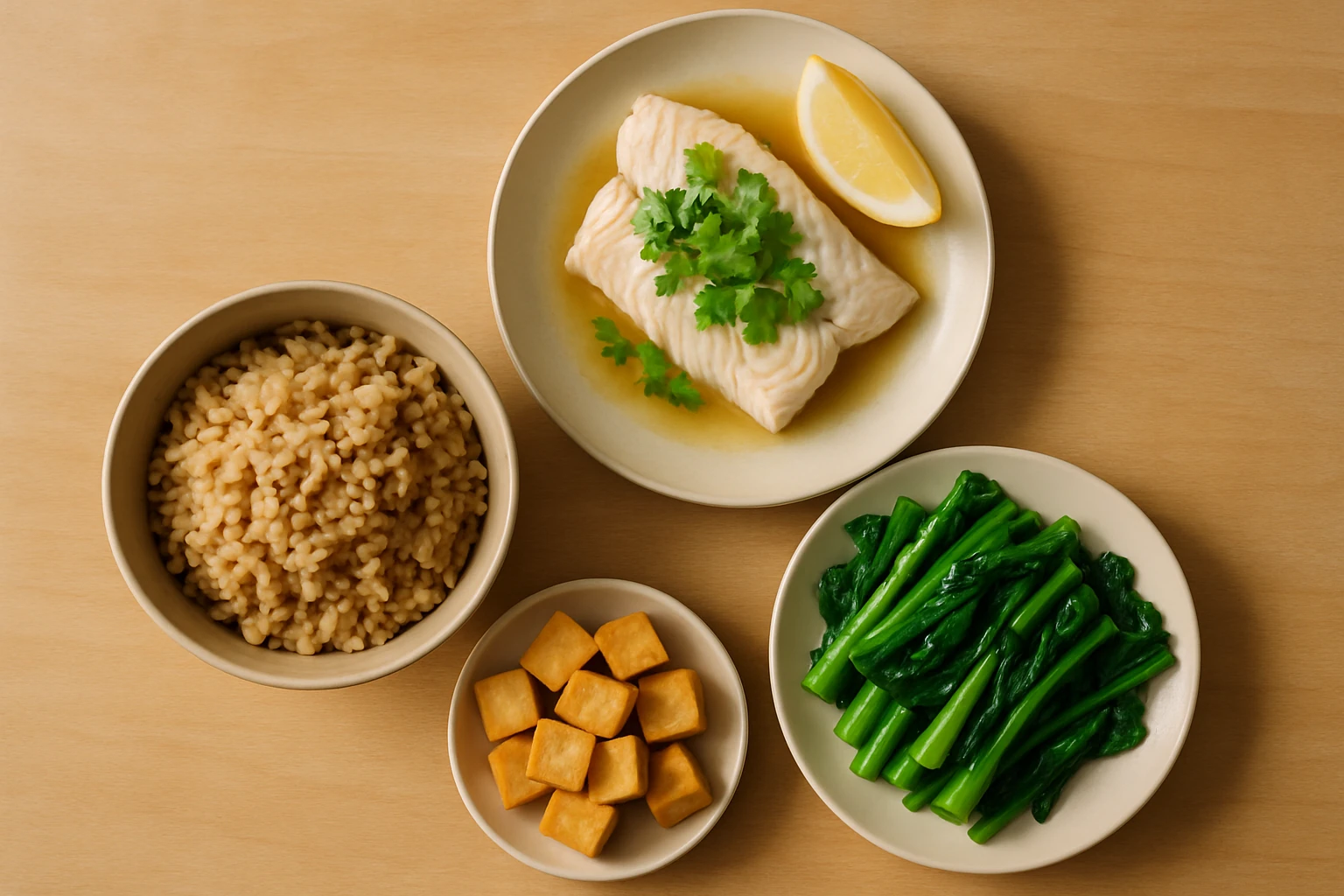
In practice, lower-GI eating often overlaps with what most people would recognise as balanced eating: choosing whole grains over highly refined carbohydrates, including plenty of vegetables, pairing carbohydrates with protein and healthy fats, and being mindful of heavily processed, sugary foods. It is less about strict rules and more about overall pattern.
A Balanced, Sustainable Approach
Some practical principles tend to hold up well:
- Favour whole, minimally processed foods most of the time.
- Build balanced meals combining carbohydrates with protein, fibre, and healthy fats.
- Avoid extreme restriction. Very restrictive diets are hard to sustain and can backfire.
- Think long term. Consistency over time matters more than short-lived perfection.
Crucially, a healthy approach to eating in PCOS is not about punishment or guilt. Disordered eating patterns can be a real risk when dietary advice becomes too rigid, so balance and flexibility matter.
Diet Is One Piece of the Puzzle
Eating well is valuable, but it works best alongside other elements of PCOS management — regular physical activity, sleep, stress management, and, where appropriate, medical options a doctor may discuss. No diet "cures" PCOS, and food alone is rarely the whole answer. A doctor or, where helpful, a dietitian can tailor guidance to your needs, preferences, and any other health considerations.
Cultural context matters too. In Singapore, building a realistic approach around familiar foods is more sustainable than trying to follow advice designed for an entirely different cuisine.
Avoiding the Restriction Trap
One of the biggest risks with PCOS eating advice is sliding into overly rigid restriction. Very strict diets are hard to sustain, can backfire, and may harm your relationship with food. Disordered eating patterns are a real risk when guidance becomes too punishing, so balance and flexibility are not just nicer — they are genuinely more effective.
A sustainable approach focuses on overall pattern rather than perfection: mostly whole, minimally processed foods, balanced meals, and consistency over time. It also leaves room for the foods and cultural context that make eating enjoyable and realistic in everyday life. A doctor or dietitian can help you build something tailored to your needs and preferences, free from guilt or extremes. If your relationship with food ever feels distressing, that is reason enough to seek support. Food can genuinely help with PCOS — most of all when the approach is kind and livable.
When to Speak to a Doctor
Consider speaking to a doctor if you have PCOS and want individualised guidance on eating, if you are confused by conflicting advice, or if you are struggling with weight or insulin-related concerns. A consultation can help you separate evidence from hype and build a plan that fits your life.
Seek prompt medical attention for any concerning symptoms, and speak to a professional if your relationship with food feels distressing.
Food can genuinely support PCOS management — most effectively as part of a balanced, individualised plan.
Speak to a licensed doctor on Zoey. A discreet, MOH-licensed consultation lets you discuss PCOS lifestyle and management with a Singapore doctor. Start a consultation when you are ready.
References
Related reading
This article is for general education and is not medical advice. A consultation with a licensed doctor is required before any treatment.